



In Saudi Arabia’s booming commercial sector, selecting the right building materials is crucial amid rapid urbanization and extreme environmental conditions. Granite and marble, both natural stones, are popular choices for flooring, countertops, facades, and interiors in offices, hotels, malls, and public buildings. Factors like durability, heat resistance, and maintenance play key roles, especially in a climate with temperatures often exceeding 50°C and frequent sandstorms.
Granite, formed from cooled magma, is hard (6-7 on Mohs scale) and resistant to scratches, heat, and stains. It’s ideal for outdoor and high-use areas but can be pricier to install. Marble, derived from limestone, offers soft elegance (3-5 on Mohs scale) with veining patterns but is more porous, prone to etching, and better for indoor luxury spaces.
Saudi projects like the Grand Mosque in Makkah highlight marble’s cooling effect, while granite’s use in facades withstands harsh weather. For commercial buildings, granite may edge out in practicality, but marble enhances prestige in lobbies and executive areas.
Natural stones like granite and marble have long been integral to construction, but their application in Saudi Arabian commercial buildings requires careful evaluation due to the region’s unique challenges. Saudi Arabia’s construction market is expanding rapidly, driven by Vision 2030 initiatives that emphasize sustainable, durable, and aesthetically pleasing developments. Commercial spaces—ranging from high-rise offices in Riyadh to luxury malls in Jeddah—demand materials that balance functionality with visual appeal. This in-depth review draws on properties, real-world examples, and expert insights to compare granite and marble, ultimately guiding choices for architects, builders, and developers.
Granite is an igneous rock formed deep within the Earth’s crust from slowly cooled magma, primarily composed of quartz, feldspar, and mica. This composition gives it a speckled or flecked appearance, with colors spanning from subtle grays and whites to vibrant reds and blues. In Saudi Arabia, local granite varieties from regions like Najran are prized for their consistency and wide color range, as noted in industry reports on the Kingdom’s natural resources.
Key properties include high hardness (6-7 on the Mohs scale), low porosity, and excellent heat resistance, allowing it to withstand direct sunlight and temperature fluctuations without cracking. These traits make granite highly durable against scratches, chips, and stains—essential in Saudi’s dusty, abrasive environment. For commercial buildings, granite is commonly used in flooring for high-traffic lobbies, countertops in food courts or kitchens, and exterior facades. Its non-porous nature repels moisture and bacteria, promoting hygiene in public spaces like hospitals or hotels.
Advantages in Saudi contexts are numerous: Granite’s thermal mass absorbs and releases heat slowly, aiding energy efficiency in air-conditioned buildings. It’s resistant to sand erosion from storms, reducing long-term wear. Local sourcing from quarries in the Kingdom lowers costs and supports sustainability, with demand projected to reach 1.6 million tons by 2026 according to investment analyses. However, cons include visible seams in large installations and higher initial fabrication costs due to its hardness, requiring professional handling.
A Comprehensive Guide to Travertine Marble Price in Saudi Arabia
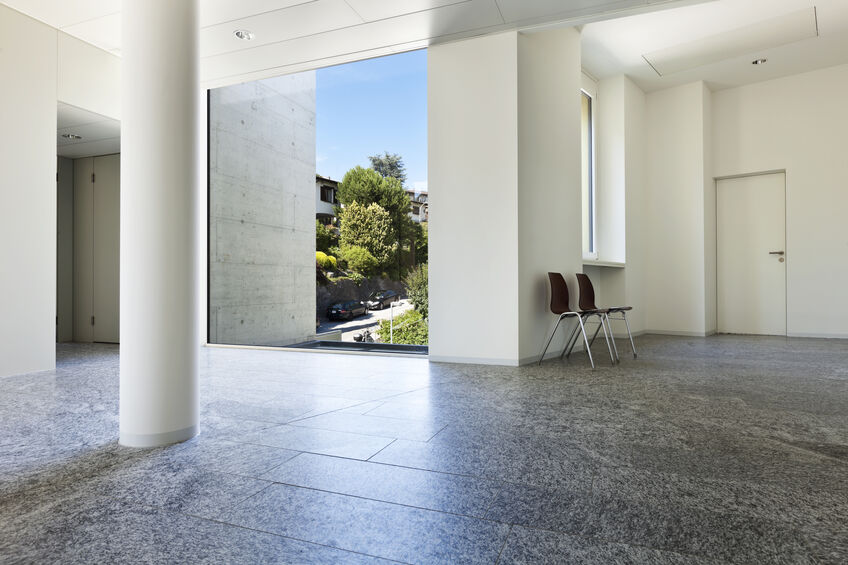
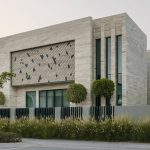
In practice, granite shines in projects like modern office towers, where its robustness handles daily foot traffic without losing luster. For instance, its use in Gulf-region facades demonstrates resistance to humidity and heat, making it a staple for sustainable commercial designs.
Marble, a metamorphic rock, originates from limestone subjected to intense heat and pressure, resulting in a crystalline structure with distinctive veining from mineral impurities. Colors are often softer—whites, grays, beiges—with elegant patterns that evoke luxury. In Saudi Arabia, imported varieties like Thassos marble from Greece are favored for premium projects, while local options add cultural resonance.
Marble ranks 3-5 on the Mohs scale, making it softer than granite but prized for its smooth, reflective surface. It’s more porous, absorbing moisture through tiny pores, which contributes to its natural cooling effect—a boon in Saudi’s scorching summers. This property is exemplified in the Two Holy Mosques, where Thassos marble floors remain cool underfoot even at 50-55°C, thanks to high solar reflectance and moisture release mechanisms, as detailed in scientific studies on thermophysical properties.
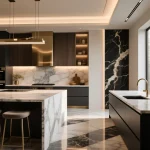
For commercial buildings, marble is ideal for interior flooring in low-traffic areas like executive suites, wall cladding in lobbies, and decorative elements in hotels. Its aesthetic versatility supports neoclassical or contemporary themes, enhancing perceived value. Pros include timeless elegance that brightens spaces and a patina that develops character over time. In hot climates, lighter marbles reflect heat, reducing surface temperatures and energy costs.
Drawbacks are significant: High porosity leads to staining and etching from acids (e.g., spills in cafes), necessitating frequent sealing (every 6-12 months). It’s less suitable for outdoors or high-traffic zones, where weathering from sand and UV exposure can dull its shine. Installation is delicate, and costs range higher ($50-150 per square foot) due to its premium status.

Saudi examples abound, such as marble courtyards in Dubai mosques (influencing regional trends) and local factories processing Saudi marble for Mecca’s Sacred Mosque, where its hardness exceeds Italian Carrara for elemental exposure.
To aid decision-making, here’s a detailed comparison across critical factors, tailored to Saudi commercial needs:
| Aspect | Granite | Marble |
|---|---|---|
| Durability | Superior (resists scratches, chips, heat); ideal for high-traffic. | Moderate (prone to etching, staining); better for low-traffic. |
| Maintenance | Low (seal every 1-2 years; simple cleaning). | High (seal every 6-12 months; avoid acids). |
| Cost | $40-100/sq ft (more affordable long-term). | $50-150/sq ft (premium but higher upkeep). |
| Aesthetics | Versatile, speckled; hides wear; modern/rustic. | Elegant, veined; luxurious/classical; brightens spaces. |
| Heat Resistance | Excellent (non-porous, thermal mass for efficiency). | Good cooling (reflective, moisture-absorbing); sensitive to shocks. |
| Climate Suitability | High (withstands dust, UV, humidity in Saudi). | Moderate (cooling benefits but needs sealing for weathering). |
| Applications | Floors, counters, exteriors in busy areas. | Interiors, decorative in luxury zones.
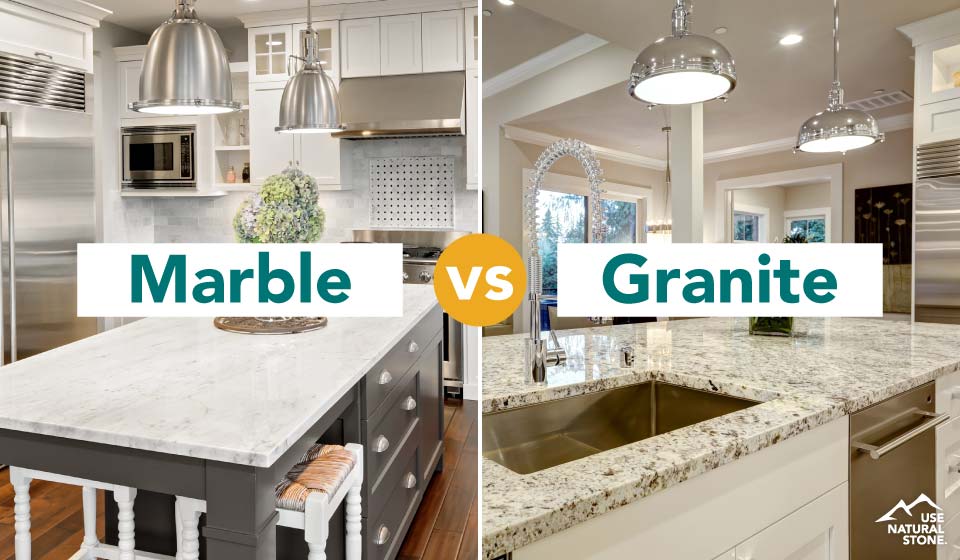
 Side-by-side comparison of granite and marble countertops, illustrating textural differences.
|
Durability favors granite for Saudi’s harsh conditions—its density repels sand and heat better, as seen in Gulf facades. Marble’s porosity demands vigilance but offers unmatched cooling, per studies on Thassos variants. Cost-wise, granite provides better ROI in high-use scenarios, while marble elevates prestige. Aesthetically, granite’s patterns suit contemporary Saudi skyscrapers, whereas marble aligns with traditional Islamic motifs.
Comprehensive Guide to Granite Importers, Suppliers, and Pricing in Saudi Arabia
Saudi’s climate—extreme heat, low humidity, sandstorms—amplifies the need for resilient materials. Granite emerges as the practical choice for most commercial applications: Its heat resistance and low maintenance suit outdoor facades and high-traffic interiors, aligning with urbanization demands. For example, Najran’s granite-rich industrial hubs supply durable stones for malls and offices, resisting erosion.
Marble, however, holds advantages in temperature regulation, as proven in the Grand Mosque where it dissipates heat via dolomite composition. In commercial settings, it’s perfect for air-conditioned lobbies or hotels, where its reflective properties reduce cooling loads. Hybrid uses—granite bases with marble accents—optimize both, as in modern Gulf projects blending durability with luxury.
Challenges include environmental impact from quarrying, but local Saudi stones mitigate this. Demand for both is high, with marble and granite flooring preferred for natural cooling, per market analyses projecting growth through 2035.


Ultimately, neither stone is universally “better”—it depends on the project. For Saudi commercial buildings prioritizing longevity and low upkeep in demanding environments, granite is often the superior option. Marble, with its cooling and aesthetic prowess, suits prestige-driven, controlled spaces. Consult experts like those at iwcstone for tailored advice, ensuring selections enhance both functionality and cultural heritage.