






For architects, contractors, and homeowners in Oman, choosing between granite and marble is a critical decision that impacts the aesthetics, budget, and longevity of any construction or renovation project. As the Omani natural stone market continues to evolve, with projections showing mixed but steady growth into 2025 and beyond, understanding the nuances of these two premium materials is more important than ever.
This comprehensive 2025 guide will delve into the key differences between granite in Oman and marble in Oman, providing you with the latest market insights, price trends, durability assessments, and maintenance protocols to make an informed choice for your next project.
Oman’s natural stone industry is a cornerstone of its architectural heritage and modern construction sector. The country is rich in natural resources, particularly high-quality marble, with an annual production capacity reaching an impressive 1 million tons. This robust output positions Oman as a significant player in the regional and global stone trade.
Recent market analyses, including reports from 6Wresearch, indicate that the Oman Natural Stone and Marble Market is projected to experience a compound annual growth rate (CAGR) of approximately 6.51% by 2028, following an initial period of more moderate growth. This upward trajectory is driven by ongoing construction booms, luxury real estate developments, and a growing appreciation for sustainable, locally-sourced building materials.
Conversely, the granite building stone market in Oman has faced recent challenges, with sales value declining for several consecutive years. However, market forecasts for 2025-2029 predict a recovery, with growth rates expected to peak at nearly 20% in 2027. This resurgence is likely fueled by granite’s renowned durability and its competitive pricing in the countertops segment, which alone represents a market valued at around USD 145 million in Oman.
At their core, granite and marble are both beautiful, natural stones, but they originate from different geological processes and possess distinct characteristics.
What is Marble?
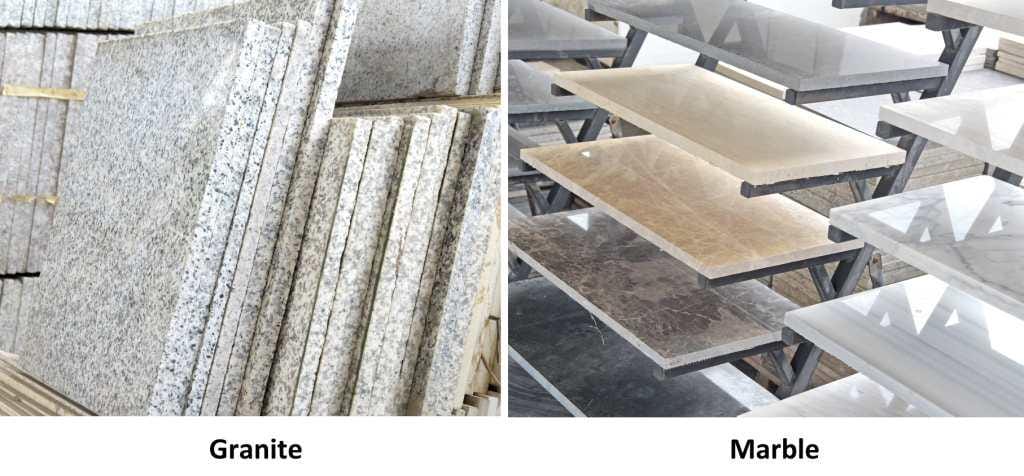
Marble is a metamorphic rock that forms when limestone is subjected to intense heat and pressure over millions of years. This process creates its signature crystalline structure and the elegant, flowing veins that make each slab unique. Omani marble, sourced from the nation’s historic lands, is especially prized for its quality and variety, blending tradition with modern architectural innovation.
What is Granite?
Granite is an igneous rock, formed from the slow cooling and solidification of molten magma beneath the Earth’s crust. This origin gives granite its exceptional hardness and a granular, speckled appearance. While Oman has local granite resources, the market also includes a wide range of imported varieties to meet specific design and functional needs.
The visual difference between the two stones is often the first and most decisive factor for designers and homeowners.
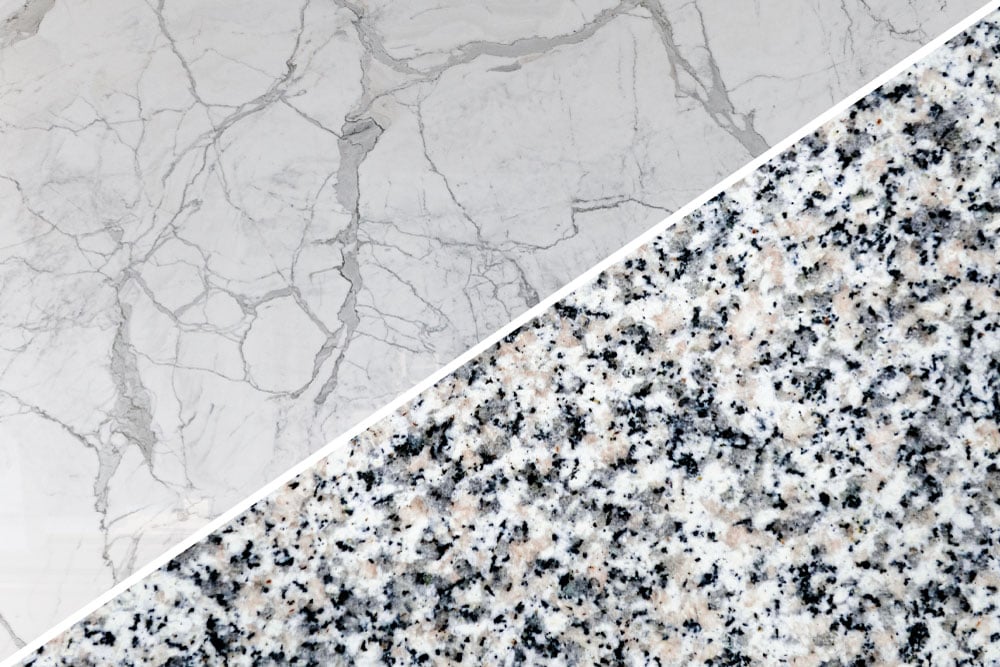
Marble in Oman offers a timeless, luxurious aesthetic. Its surface is typically polished to a high, reflective gloss, showcasing elegant veins in colors ranging from classic white and grey to warmer beiges and even dramatic greens and reds. This veining is never uniform, ensuring that every marble installation is a one-of-a-kind piece of art. It evokes sophistication and is a perennial favorite for luxury hotels, high-end residences, and statement feature walls.
Granite in Oman presents a bolder, more natural look. Its appearance is defined by a speckled or flecked pattern of various minerals, resulting in a wide spectrum of colors—from deep blacks and blues to vibrant reds and earthy browns. The pattern is more consistent across a slab than marble’s veins, offering a cohesive look for large surfaces. Granite’s aesthetic is often described as robust and organic, making it ideal for creating a striking, contemporary feel.
Durability is where the practical differences between granite and marble become most apparent, especially in high-traffic areas like kitchens and commercial spaces.
Scratch Resistance:
Stain Resistance:
Heat Resistance:
Overall Longevity: For floors, kitchen countertops, and other high-wear applications in Oman’s active households and commercial projects, granite is the unequivocal champion in durability. Marble, while strong, requires a more careful environment to maintain its pristine appearance over decades.
The long-term beauty of your stone depends heavily on a proper maintenance regimen.
Marble Maintenance:
Marble demands a higher level of care. It must be sealed upon installation and re-sealed every 6 to 12 months, depending on usage. Daily cleaning requires pH-neutral, non-abrasive cleaners specifically designed for natural stone. Acidic or vinegar-based cleaners will cause etching—dull, light marks on the polished surface. In kitchens, using coasters, trivets, and cutting boards is non-negotiable.
Granite Maintenance:
Granite is relatively low-maintenance. A quality sealing upon installation is crucial, but re-sealing is typically only needed every 1 to 2 years. It is easier to clean with mild soap and water, though harsh chemicals should still be avoided. Its resilience makes it more forgiving in busy environments.
For both stones, professional polishing and honing can restore the surface years down the line, but marble will require this service more frequently.
Cost is a major determining factor. Prices fluctuate based on quality, rarity, color, origin, and finish. The following ranges reflect estimated costs for the Omani market in 2025, including supply and installation.
Marble Price in Oman (per square meter):
Granite Price in Oman (per square meter):
Key Price Influencers:
While beautiful local Omani marble can be very competitively priced, exotic imported marble remains a luxury investment. Granite generally offers a wider range of affordable options, though high-end exotic granite can rival marble in price.
The decision between granite and marble isn’t about which is objectively better, but which is better for your specific needs.
Choose Marble in Oman if:
Choose Granite in Oman if:
Whether you lean towards the classic veins of marble in Oman or the rugged durability of granite in Oman, the success of your project hinges on sourcing quality materials from a reputable supplier. A leading supplier will not only provide a wide selection of both local and imported stones but will also offer expert guidance on selection, proper sealing, installation, and long-term care.
As the Omani market grows towards 2025, partnering with an experienced stone company ensures you navigate price trends, access the best materials, and achieve a result that balances beauty, functionality, and value—creating spaces that are built to last and designed to impress.